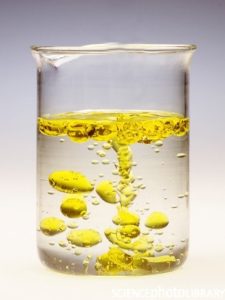
 Free and emulsified water are the two most harmful conditions in a lubricating system. The incompressibility of water overrides the hydrodynamic oil film that protects bearings, leading to excessive wear. As little as one percent water in oil can reduce the life expectancy of a journal bearing by as much as 90 percent.
Water will also degrade the life of your lubricant. Moisture contamination can promote the oxidation of the oil by up to 10 times, breaking down the hydrocarbon chains and decreasing the lubricating properties.
Oils containing some types of additives are even more vulnerable to water contamination. Sulfurous AW and EP type additives and phenolic antioxidants are readily broken down by water. This not only destroys their usefulness, but the destruction forms acids which can corrode soft metals such as Babbitt, bronze and brass. The copper, lead, and tin released from this corrosion are catalytic metals which actually accelerate the process. Even synthetic oils containing dibase esters and phosphate esters are not immune. These compounds are known to react with water and form acids, increasing corrosion and degrading the base stock.
Water can disperse other additives such as demulsifying agents, detergents and rust inhibitors, resulting in sludge and sediment buildup, filter plugging and poor oil/water demulsibility.
There is no safe level of water contamination. While maintaining contamination below the saturation point will reduce the levels of free and emulisified water, any amount will start the cycle of degradation.
We recommend that you send a lube oil sample out for analysis on a monthly basis. Then read their report very carefully, noting all metals and water contamination. The service should also provide a narrative of the findings. If you need any help in interpreting the report, please contact us at Ask Mr. Turbine.
Click Here to ask your own question of TGM’s Mr. Turbine or call the 24 Hour Hotline at 888.MrTurbine (888.678.8724)

Stationary Blade Restoration
/in Project Spotlight /by Mike.LakeDuring the most recent outage season, PSG was contracted to perform the in-place restoration of stationary blades on an 800MW Steam Turbine for a large power producer in the United States. The customer was looking for a solution where the blades could be restored without completely disassembling the unit and sending the components to a shop – enabling them to save valuable generation time and significant expense. Our Field Machining Division mobilized our specialized technicians and equipment and began the detailed process of restoring the blades, ultimately returning them to operating specifications.
The customer was extremely pleased with the outcome of the project and commented on the high-quality craftsmanship displayed by our technicians. This is another example of the complicated turbine repairs we can perform on-site, and a testament to the quality of our execution personnel.
Measure the Cause, Not the Symptom
/in Steam Turbine Tips /by Mike.LakeSpill Strip Installation
/in Project Spotlight /by Mike.LakeWe are in the process of installing new spill strips for an industrial GE Steam Turbine. Very nice work by our Steam Path Repair facility in Pevely, Missouri.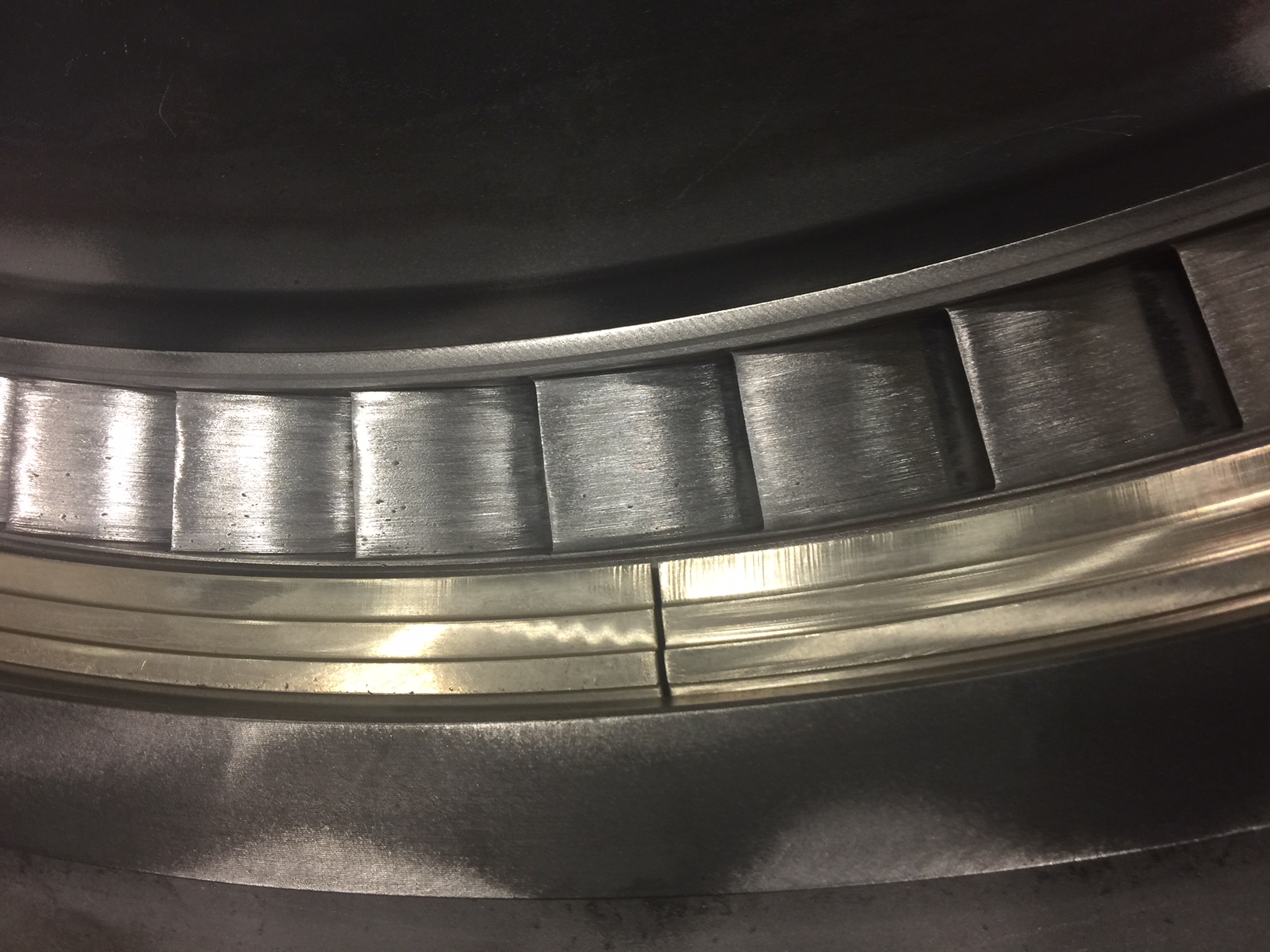
69th Annual AREGC Conference
/in Events /by Mike.LakeWe are at the 69th Annual AREGC Conference in Lanier Islands, Georgia this week. Please stop by and visit us if you are attending. This year’s conference is being hosted by Oglethorpe Power Corporation. Thank you to all those who organized the event!
New 1st Stage Bucket Installation
/in Events /by Mike.LakePSG’s Steam Path Repair Facility, located just outside of St. Louis, Missouri, has been busy this spring. One of the many projects we executed last month was the installation of new 1st stage buckets on an industrial GE Steam Turbine. The time and precision it takes to successfully install these buckets is extremely impressive. The meticulous attention to detail by our trained technicians allowed us to complete the installation safely, on-time, and with the highest level of quality. Great work team!
2018 Frame 6 User’s Group Conference
/in Events, News /by Mike.LakeWe look forward to seeing everyone at this year’s Frame 6 Users Group Conference in Ponte Vedra Beach, Florida! It should be another fun event. Please stop by Power Services Group at Booth #13 during the Vendor Trade Show. Safe travels and see you next week!
CPS Energy tees off United Way campaign to support SAMMinistries
/in Events /by Mike.LakeGreat work by everyone that made this possible. PSG is proud to have been part of this event and the good that it has done for the San Antonio community. The volunteers that make all of this happen are amazing individuals, thank you!
PSG is equipped and ready to tackle your Journal and Shaft Machining Projects
/in News /by Mike.LakePower Services Group’s field machining division, Orbital Energy Services, has successfully repaired thousands of shafts and bearing journals in power and industrial facilities across the globe over the past 20 years. Our unique, on-site machining process requires absolutely no need for shaft rotation, and avoids the issues related to removing and shipping equipment to a shop: costly mobilizations, exorbitant shipping costs, potential damage during shipment, valuable lay down space, and plant crane and rigging requirements. Orbital Energy Services’ finely tuned and safe processes coupled with a full range of equipment ensure customers receive the highest quality at a competitive price. If you have a journal or shaft machining project, planned or an emergency, please contact us anytime for a fast response.
The Ugly Effects of Water in Lube Oil
/in Steam Turbine Tips /by Mike.LakeWater will also degrade the life of your lubricant. Moisture contamination can promote the oxidation of the oil by up to 10 times, breaking down the hydrocarbon chains and decreasing the lubricating properties.
Oils containing some types of additives are even more vulnerable to water contamination. Sulfurous AW and EP type additives and phenolic antioxidants are readily broken down by water. This not only destroys their usefulness, but the destruction forms acids which can corrode soft metals such as Babbitt, bronze and brass. The copper, lead, and tin released from this corrosion are catalytic metals which actually accelerate the process. Even synthetic oils containing dibase esters and phosphate esters are not immune. These compounds are known to react with water and form acids, increasing corrosion and degrading the base stock.
Water can disperse other additives such as demulsifying agents, detergents and rust inhibitors, resulting in sludge and sediment buildup, filter plugging and poor oil/water demulsibility.
There is no safe level of water contamination. While maintaining contamination below the saturation point will reduce the levels of free and emulisified water, any amount will start the cycle of degradation.
We recommend that you send a lube oil sample out for analysis on a monthly basis. Then read their report very carefully, noting all metals and water contamination. The service should also provide a narrative of the findings. If you need any help in interpreting the report, please contact us at Ask Mr. Turbine.
Click Here to ask your own question of TGM’s Mr. Turbine or call the 24 Hour Hotline at 888.MrTurbine (888.678.8724)
2018 NAES O&M Conference
/in Events /by Mike.LakeWe look forward to seeing everyone at this year’s NAES O&M Conference in Colorado Springs, Colorado! It should be another fun event. Please stop by the Power Services Group booth during the Vendor Trade Show. Mike Lake and Gary Beck will be in attendance representing PSG and will be looking forward to meeting everyone. Safe Travels and see you next week!